Microcement walls in living rooms and kitchens: a guide for interior designers
The concrete look on walls has been in fashion for years, but clients increasingly want a warmer version: beige, linen, softened by light. Microcement makes that possible, because colour and texture are set on a sample and the surface is continuous, with no joints. In this article we compare it with other solutions and suggest how to plan it in a design.
Published · 4 min read
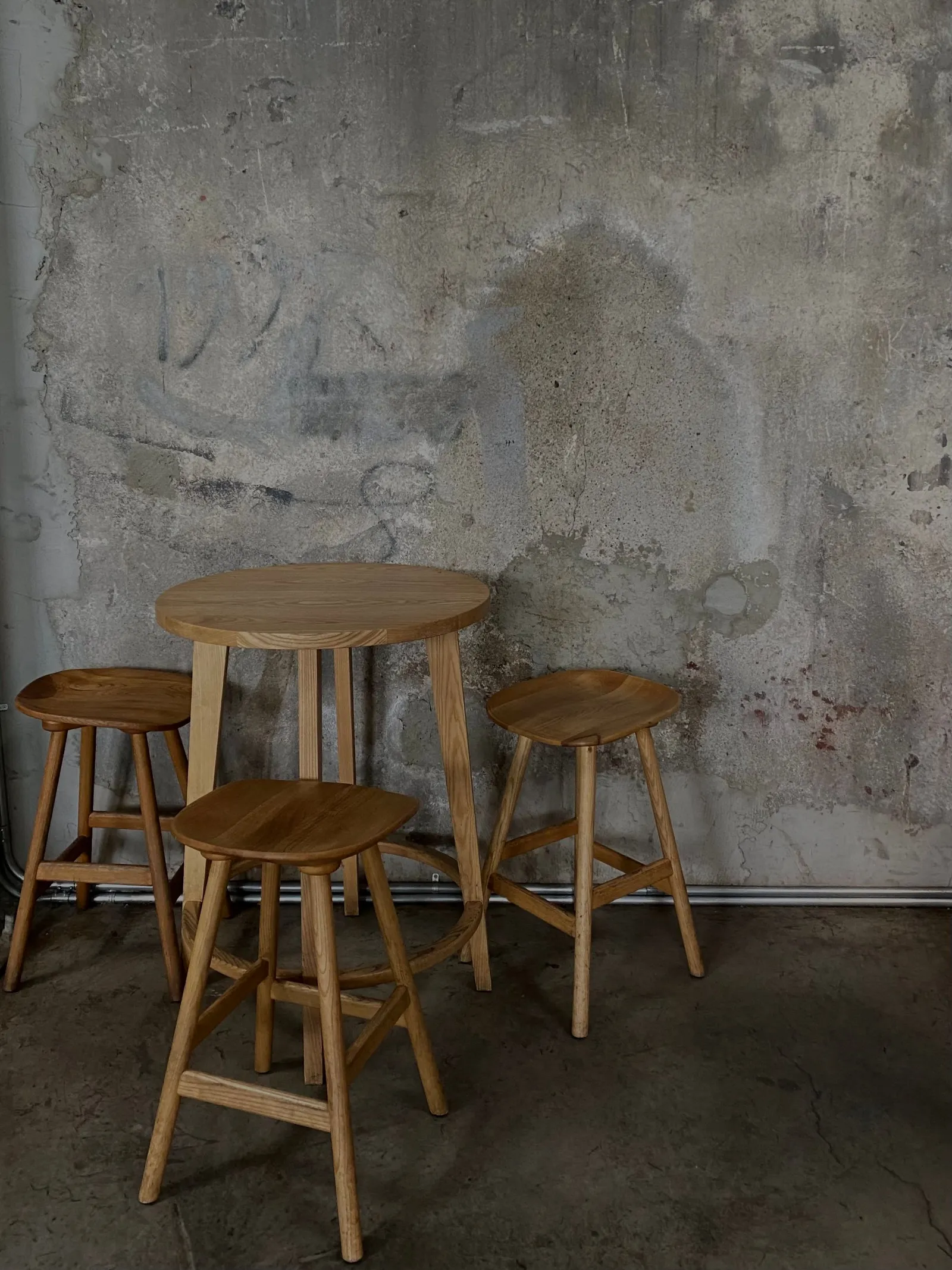
Microcement, effect paint or concrete-look panels
Effect paints and compounds give an impression of concrete, but their texture is usually flat and their durability close to an ordinary painted wall. Concrete-look panels are quick to install but have joints and a limited choice of formats. Microcement is a thin mineral layer applied by hand. It has real depth, changes with the light and forms one plane without divisions, including corners and niches.
The difference is especially visible in side light from a window. Paint then looks printed, while microcement shows the subtle relief of trowel work. It is this relief that makes the wall look refined rather than decorative.
Colour and light in the room
The same shade looks different in a north-facing room and a south-facing one. Cool, diffuse northern light brings out grey, while warm southern light draws out beiges and ochres. In the evening the colour of the bulbs decides. That is why we never choose a colour from a screen or a catalogue swatch.
We prepare samples on boards or directly on the wall and look at them at different times of day. For a designer this is also a tool for talking to the client: it is easier to accept a colour seen in one's own room than a code from a palette.
Texture: from smooth to clearly clouded
Texture is shaped by how the trowel is worked and by the number of layers. A smooth surface with gentle shading suits minimalist and modern interiors. Visible clouding and traces of the hand suit wabi-sabi, and interiors with timber, linen and ceramics. Decide on texture together with colour, because each affects how the other is read.
Kitchens: the wall behind the worktop
Microcement behind the worktop is an elegant alternative to tiles and glass. In this zone the wall meets grease, water and steam, so we use a tougher sealer and finish the junction with the worktop more carefully. Behind a hob, plan the clearance or guard required by the hob manufacturer. Everyday marks are wiped with a damp cloth and a mild cleaner.
Details to agree before the work
Microcement reveals every detail, so the design should anticipate them.
- Sockets and switches: boxes set flush with the wall plane, frames fitted after our work.
- Corners: sharp or gently rounded, without plastic beads.
- Skirtings: none, a shadow-gap skirting or a microcement upstand.
- Junctions with other materials: timber, stone, door frames and joinery.
- Lighting: the angle of light from an LED slot strongly emphasises texture.
How to describe microcement in design documentation
A good description makes quoting and handover easier. State the substrate the coating goes on, the expected texture and reference colour, the finish (matt or satin) and the zones with higher demands, such as a kitchen or bathroom. On request we prepare a system description and hand over the manufacturer data sheets. Handover is best done together with the designer, in daylight.
Microcement in bedrooms, bathrooms and around fireplaces
In a bedroom a microcement wall behind the bed replaces an upholstered headboard and gives a calm backdrop for linen and timber. In a bathroom the same material can run from the wall onto the floor and into the shower, with waterproofing in the wet area of course. Near a fireplace, remember the clearances and guards required by the stove manufacturer: microcement looks good next to the surround but does not replace fire-resistant cladding.
Questions clients ask designers
We hear these questions most often at meetings a designer invites us to.
- Will the wall look exactly like the visualisation? The visualisation shows the direction; the sample in the room's light decides the result.
- Can I hang a picture or shelf later? Yes, it is drilled like any wall.
- Will hand marks show? The sealer limits them, and a damp cloth is usually enough.
- Will every wall be identical? No, and that is the point: handwork gives subtle differences that set microcement apart from a print.