A floor without joints,
from living room to hall.
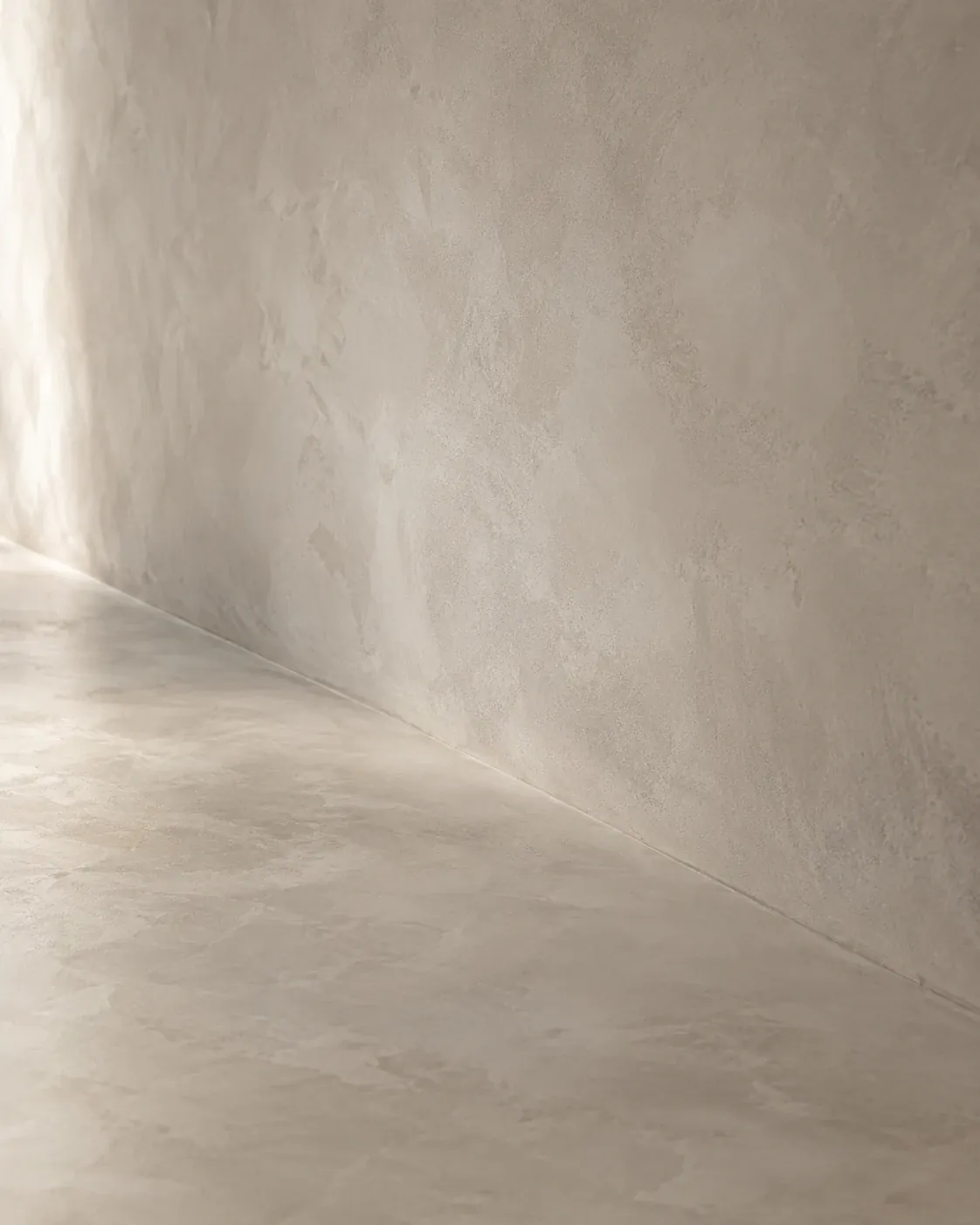
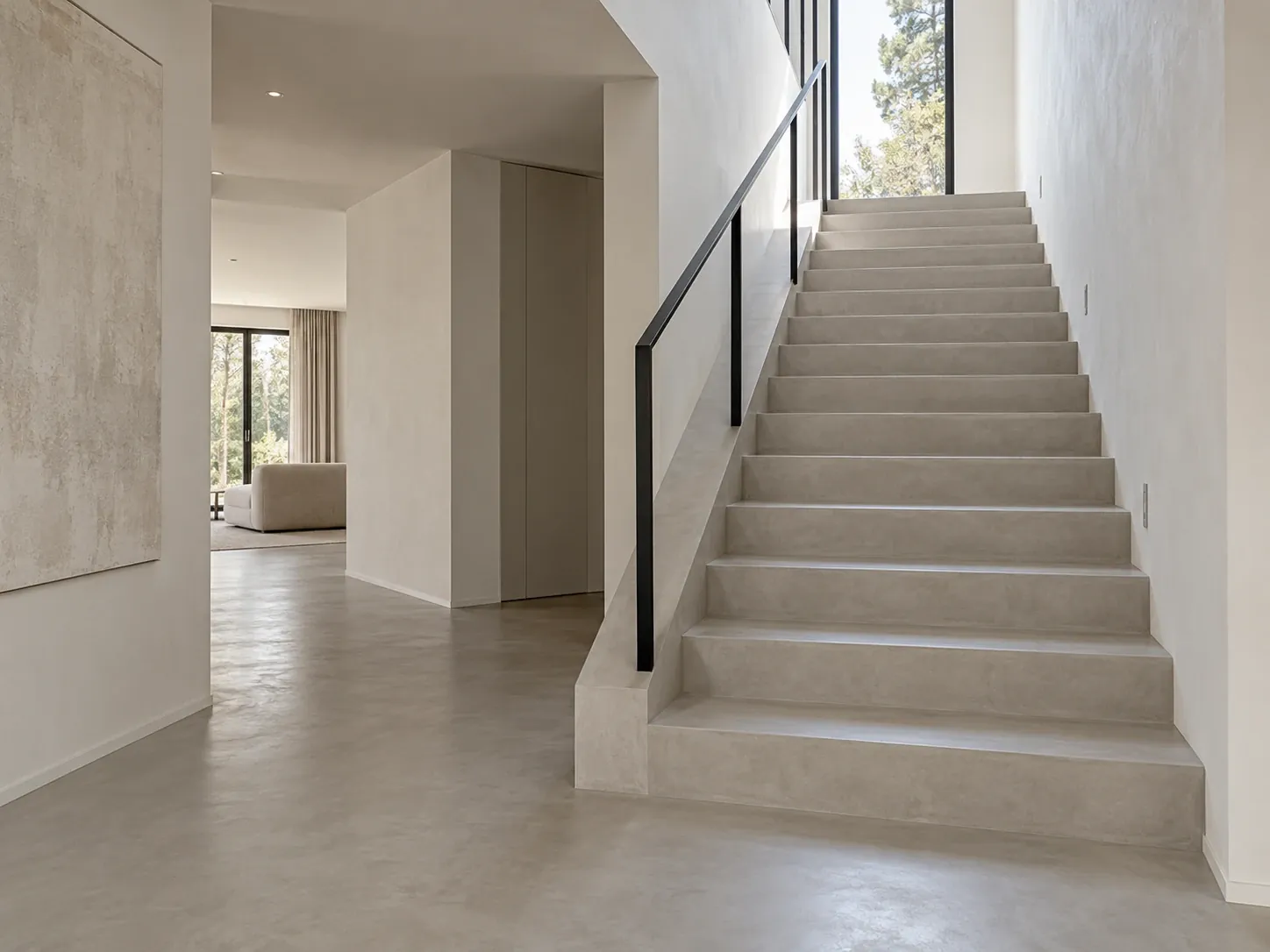
Microcement forms a continuous floor about 2 to 3 mm thick. It runs between rooms without thresholds where the structure allows and works well with underfloor heating.
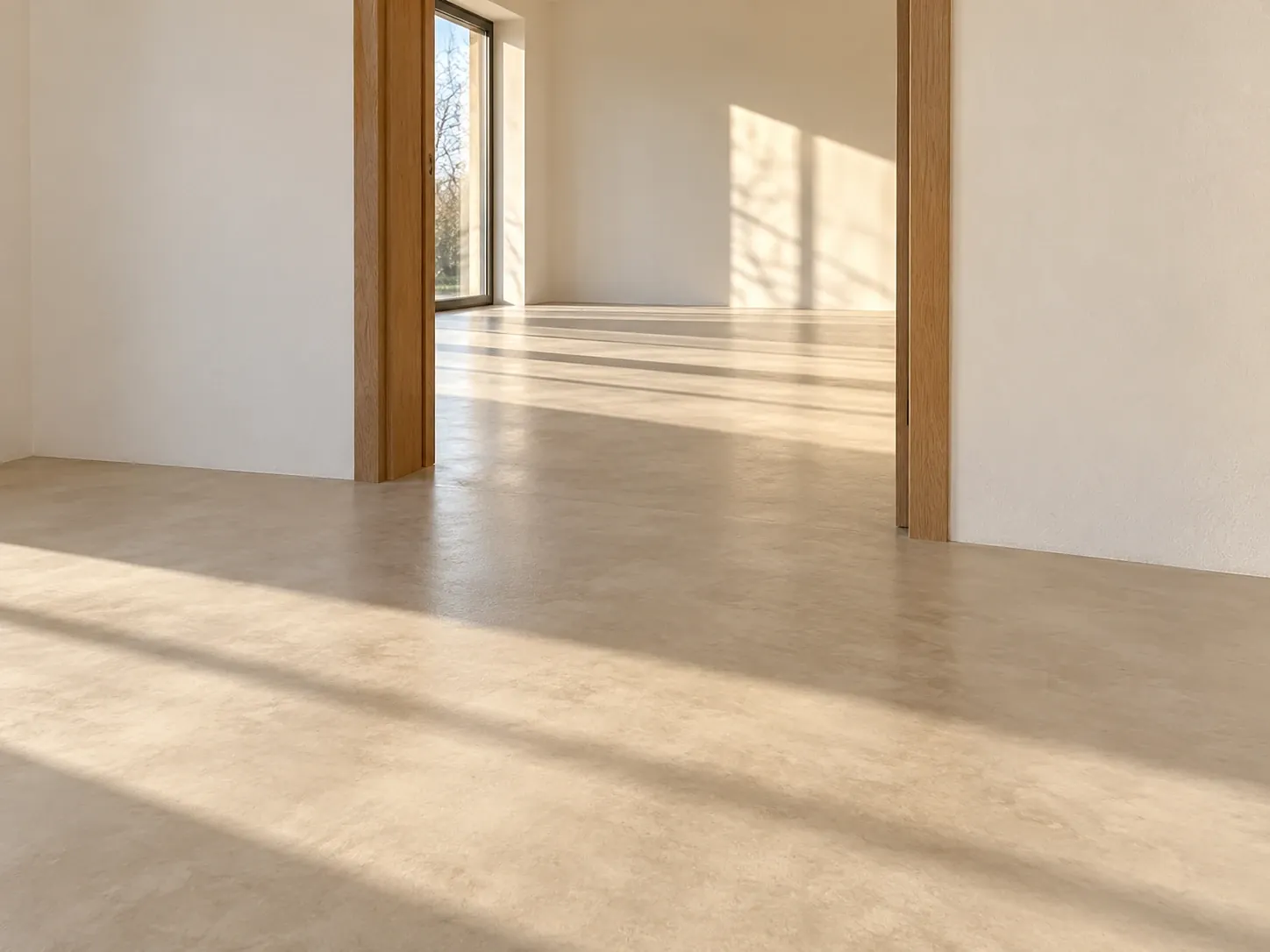
One plane through the whole apartment
A microcement floor brings order to an interior. Without joints or divisions rooms look larger, and furniture and light get a calm backdrop. It suits new houses and renovations alike, because stable tiles do not need to be removed.
No thresholds or trims
A continuous surface between rooms. We leave movement joints only where the building structure needs them.
Underfloor heating
The thin layer conducts heat well and does not slow the floor down.
Renovation without demolition
On stable tiles we lay microcement without removing them, which shortens the work and cuts dust.
From the gallery
How we do it
- 1
Substrate check
We check moisture, stability and cracks before giving a price.
- 2
Preparation
We grind, repair, prime and, where needed, embed a mesh.
- 3
Microcement layers
Two layers with sanding in between set the final colour and texture.
- 4
Protection
The sealer is chosen for the traffic in each room.
Questions and answers
Does a microcement floor scratch?
Like any surface, it can be scratched by sand and sharp objects. A durable sealer and felt pads under furniture greatly reduce the risk.
Can I walk on it in shoes?
Yes. A doormat at the entrance helps, because sand acts like sandpaper.
How long does a floor take?
Usually a few working days, depending on the area and the substrate. Each layer needs time to dry.
Let us plan your floor
Give us the area and the current substrate. We will arrange a survey and send a written quote.